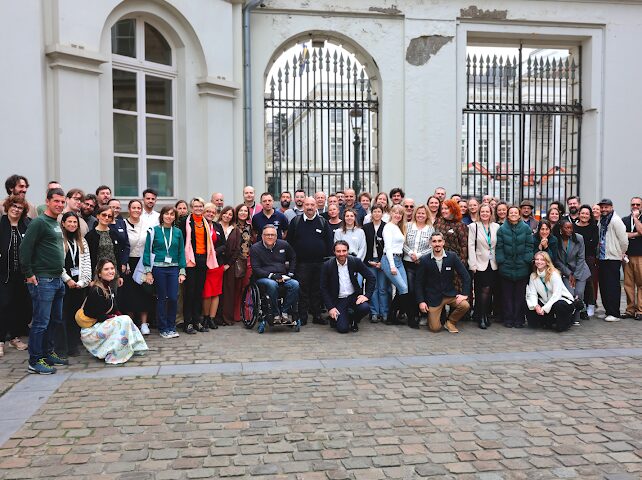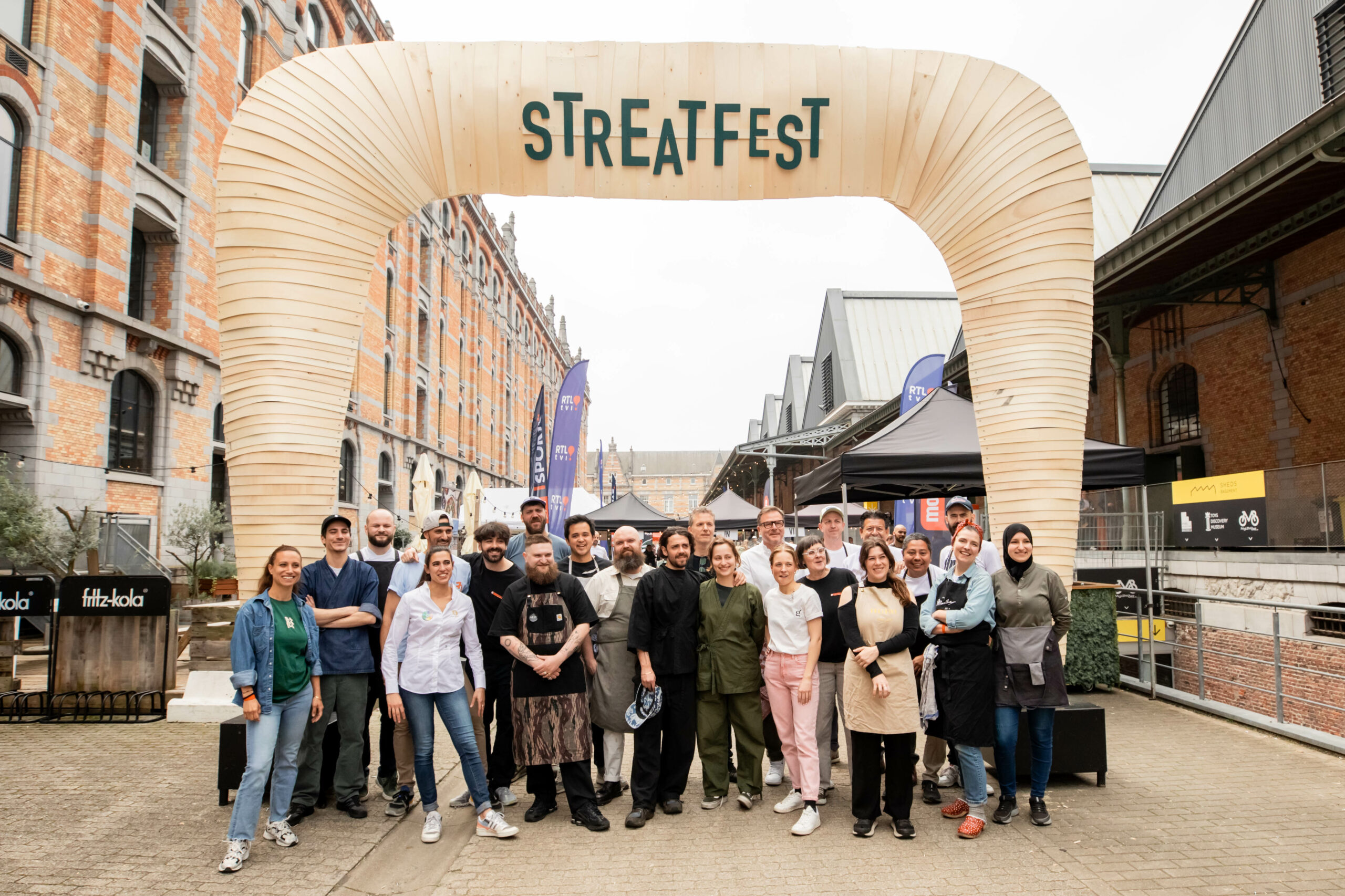
The European project TASTE (Transformative Approaches for Sustainable Food in Tourism) has just unveiled the list of winners of its acceleration programme “Go Green, Get Digital, Be Resilient”, which aims to support the development of innovative approaches strengthening the sustainability of food management in the tourism sector. In this ranking, eight projects led by Brussels SMEs have struck gold: €15,000 in funding and tailor-made support to test their innovations. Whether in the form of a new product, a new service or even a process, these eight projects share the same vision: to demonstrate that Brussels can be a leading tourist destination and a reference in sustainable gastronomy. In other words, that tourism can nourish territories without devouring them. The hospitality cluster of hub.brussels will orchestrate the support for these projects in the field.
The winners are:
Brussels Major Events: when 4 million visitors learn to compost
Brussels Major Events (BME) is the organiser of Brussels’ Christmas market, an event that amounts to managing a small temporary city welcoming four million visitors in just a few weeks. Waste management is obviously a Herculean challenge, all the more so when approached through the lens of recycling. This year, BME’s idea flirts with modern alchemy: turning Winter Wonders into a testing ground for compostable tableware. Once used, plates, bowls and cutlery will be processed through an organic stream and transformed into fertiliser and green energy.
The TASTE programme arrives at the perfect time, since another challenge awaits BME: raising awareness among an international public of the joys of festive waste sorting, explaining in several languages that their tartiflette trays will return to the earth.
Brussels Sustainable Food Tour: fermentation as a common thread
Cookwork and its partners (Concept Chocolate, Fermenthings, La Source Brewery, Parckfarm and Bazaar Trottoir) have imagined an immersive tourism experience built around an age-old process currently enjoying renewed popularity: fermentation. Their one-day gastronomic tour will teach visitors that chocolate, bread, vegetables and beer all share this ancestral secret.
Beyond the gourmet stroll, this journey also unveils Brussels’ little-known industrial heritage while exploring neighbourhoods overlooked by tourist guides. Fermentation thus becomes the perfect pretext for reconciling mass tourism with authentic discoveries.
Brussels Food Festival: a bridge between chefs and local producers
Cross Over Innovation, Man Natura and IMPACTE (the Brussels Slow Food community) are tackling a complex equation: how to efficiently connect the 30 stands of the Brussels Food Festival with local agroecological producers? Their answer: a structured directory and a matchmaking methodology tested in real conditions during the 2026 edition of the Brussels Food Festival, which should once again attract nearly 10,000 food lovers.
The objectives are both pragmatic and ambitious: create short and profitable supply chains, generate new outlets for agricultural SMEs, and reduce the carbon footprint of festivals. If the pilot phase proves conclusive, a European good-practice guide will be published to inspire event organisers across the continent.
The Inclusive Kitchen: mapping inclusive gastronomy
Destination Everywhere, Once in Brussels and WheelTribe.eu are launching a project that broadens the very definition of sustainability. Their idea? To identify at least forty Belgian food businesses (restaurants, caterers, producers, street food) run by or employing people with disabilities, then integrate them into tourist circuits through three regional itineraries.
Indeed, these businesses, often rooted in their local communities, naturally favour short supply chains and sustainable practices. The project also includes two networking breakfasts to connect these actors with a hundred guides, event organisers and institutional buyers. Social and environmental sustainability converge here to highlight the merits of an inclusive economy.
Let Eat Stew: an ode to stew and slow meat
The non-profit ENTIER is a collective of restaurateurs aiming to reconnect supply and demand for environmentally respectful, ethical and local meat. Their new tasty idea to counter meat industrialisation: their project “Let Eat Stew”, an event celebrating stew, long cooking and whole-animal use, from tail to shoulder — the antithesis of fast food and plastic-wrapped meat.
Scheduled for January, a slow period for the hospitality sector but perfect for comfort dishes, “Let Eat Stew” will offer tourists and Brussels residents immersive “farm-to-fork” experiences with workshops, butchery demonstrations and other events where chefs, butchers and farmers share their philosophy. Stew as the banner of responsible eating: who would have thought?
Freddy Met Curry: digitising environmental impact
Accurately measuring the environmental footprint of food production: a crucial and technical challenge that Freddy Met Curry seeks to address. After experimenting with various tracking tools, the company is now developing a centralised platform enabling sector professionals to model, from an environmental standpoint, every component of their production: menus, recipes, ingredients, containers, labour.
Project partners (Craft Studios, Bru 58, 100Pap and Chouette Canette), all local actors in food tourism, will test the tool to identify precisely where their environmental impact comes from — and, more importantly, how to reduce it. In a sector where “sustainable” can quickly become an empty word, this “Data” approach aims to structure the sector’s environmental transition on objective foundations.
Entropy x Coddy: the “phygital” urban trail
Imagine an urban treasure hunt that entertains while delighting. This project, led by Entropy, chef Elliott Van de Velde’s restaurant, in collaboration with Coddy, a specialist in urban escape games, aims to offer visitors and Brussels residents a “phygital” (physical and digital) experience during which participants explore Brussels’ city centre on foot through a quest on their smartphone, become aware of sustainable food, discover often invisible sustainable food initiatives (beekeepers on rooftops, urban farmers, heritage breweries), taste ingredients blind in partner shops, and take part in a workshop inspired by the “Food Fresco” either online or in person.
The experience ends with a zero-waste cooking workshop at Entropy or in another sustainable, local restaurant. Beyond the immediate pleasure, this journey aims to strengthen the entire urban food ecosystem by boosting its visibility and collaborations.
Les Cycles du Terroir: cycling towards local gastronomy
Les Cycles du Terroir, a project led by the non-profit Pro Vélo, offers a gourmet cycling route in Brussels with five tasting stops at local producers and “Good Food” restaurateurs. Guided or self-guided, this recreational event is aimed at tourists as well as Brussels residents curious to meet the artisans of sustainable gastronomy.
The project ticks all the boxes of soft mobility and responsible tourism: discovering Brussels off the beaten path, meeting producers, tasting local and seasonal products, promoting cycling as a mode of tourist transport. A formula that proves that tourism innovation can rhyme with simplicity and conviviality, without high-tech gimmicks or greenwashing.