Across Belgium, gastronomy is a major driver of tourism, a vector of identity and a space for encounters. Yet one essential element of this culinary landscape remains largely invisible: food businesses led by, or employing, people with disabilities, as well as those facing barriers to entering the labour market, including refugees or people with limited schooling. With The Inclusive Kitchen Belgium, supported by the European TASTE programme, Destination Everywhere and Once in Brussels have decided to transform this reality. Their ambition: to make inclusion a lever for sustainable innovation by integrating at least forty inclusive businesses into the tourism value chain through a national mapping, a promotional campaign and three regional itineraries.
Mapping culinary inclusion: an unprecedented field study
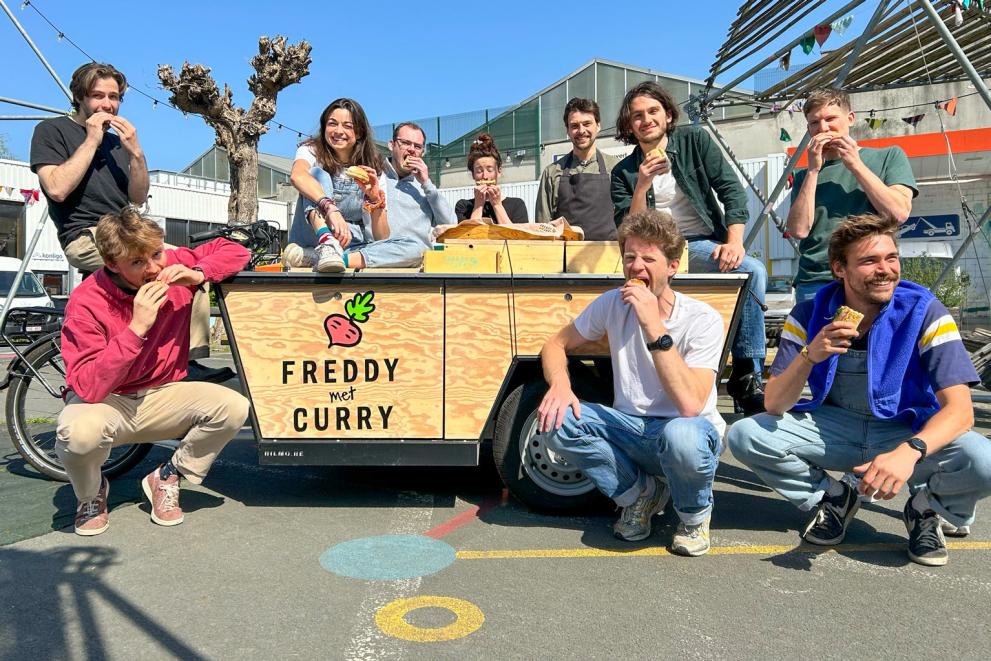
To rethink the place of inclusion in tourism, the project begins with an essential step: identifying and documenting restaurants, caterers, producers and street-food actors who employ or are led by people with disabilities. These businesses, often deeply rooted in their local communities, favour short supply chains, small-scale practices and organic approaches, naturally reducing their environmental impact.
This mapping has evolved into a fully interactive platform, now accessible on inclusivekitchen.be. It features a dynamic map and detailed profiles for each listed business, offering event organisers and tourism operators a clear tool to easily identify a socially responsible restaurant, an engaged sandwich shop or an ethical catering service. It ensures lasting visibility for inclusive businesses and supports their concrete integration into promotion, programming and responsible purchasing strategies.
This research and mapping work also benefited from the contribution of Adil Idrissi, intern in the Master’s in Tourism at the Université libre de Bruxelles (ULB), strengthening the link between the project and academic training.
Co-creating regional itineraries: a new way to tell the story of gastronomy
The objective is not limited to listing: it is about integrating these businesses into the tourist experience. Three regional itineraries have been created in Flanders (Ostend), Brussels (Tour & Taxis) and Wallonia (Nivelles), combining inclusive gastronomic addresses with the discovery of local history and architecture. For each route, precise accessibility information provided by Eleonora Censorii (Destination Everywhere) facilitates visit planning for travellers and professionals alike. The Nivelles itinerary also includes an audio guide, narrated by Mélanie Saussez (Once in Brussels), accompanying visitors through the territory and the “inclusive kitchens” along the way, giving voice to the places and the people who bring them to life.
Connecting actors: an innovative networking format
To make inclusion a reflex in tourism and event practices, the project innovated by organising two networking breakfasts, one in Brussels and one in Flanders, bringing together more than 100 guides, event organisers and institutional buyers. Inclusive SMEs presented their services through three‑minute pitches, a dynamic format that encouraged direct connections and fostered the integration of inclusive suppliers into purchasing, event organisation and tourism promotion practices.
This encounter between gastronomy, accessibility and responsible purchasing is a first in Belgium and paves the way for new collaborations.
A model designed to inspire European destinations
Beyond its immediate results : 60 social enterprises highlighted, more than 80 people involved and new tourism products created, The Inclusive Kitchen Belgium aims to be an exportable prototype. Its methodology, based on mapping, digital promotion, co‑creation of itineraries and direct connection between actors, can be easily adapted to other European regions.
Thanks to the TASTE network, the project offers an ideal framework for cross‑border dissemination, enabling other destinations to draw inspiration from this model where inclusion, sustainability and gastronomy advance together.
Belgium as a pioneer of fairer and more sustainable tourism
By revealing the richness of inclusive food businesses and fully integrating them into the tourism ecosystem, The Inclusive Kitchen Belgium opens a new path: that of more responsible, more human and more coherent tourism. A tourism where every actor, from guide to visitor, from producer to restaurateur, contributes to a more inclusive and resilient economy.
Belgium thus confirms its ambition: to become a European laboratory where social innovation fuels tourism innovation and where inclusion becomes self-evident.
 The Inclusive Kitchen
Destination Everywhere
Once in Brussels
Learn more about TASTE
TASTE Project
TASTE LinkedIn
The Inclusive Kitchen
Destination Everywhere
Once in Brussels
Learn more about TASTE
TASTE Project
TASTE LinkedIn