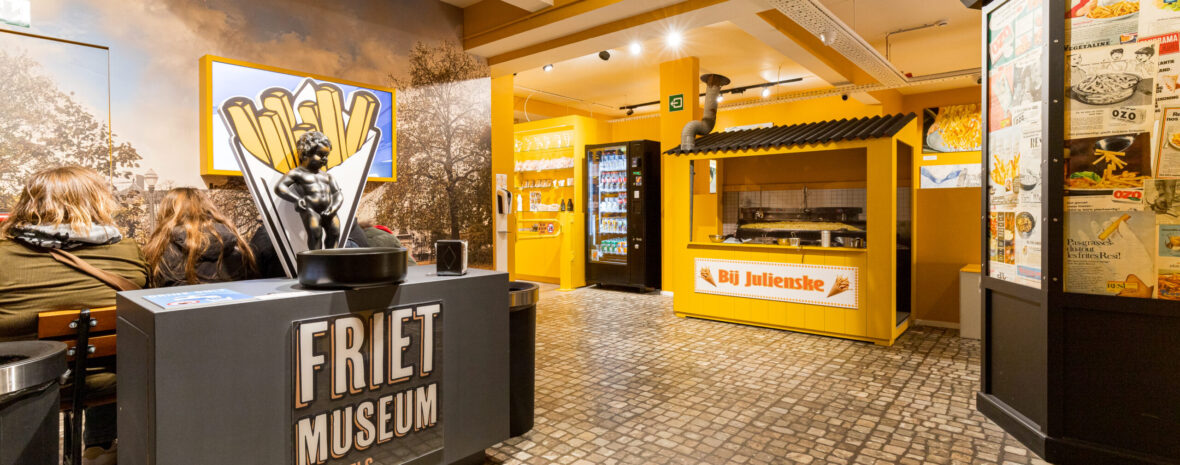
The Frietmuseum : between immersion, culture, and pleasure
Some projects are born from an opportunity. For Mike Misson, now Manager of the Frietmuseum in Brussels, that opportunity came when he was looking to change his life after thirty years behind the counter of his jewelry shop. Thirty years in contact with customers, understanding their expectations, and developing a strong sense of service and hospitality. It was precisely at that moment that this opportunity appeared, in the right place, at the right time.
Before accepting, Mike visited the fries museum located in Bruges. He immediately saw its potential: a clear concept, a strategic Brussels location, but above all, a strong yet simple idea: presenting fries in a different way. The Frietmuseum is part of a profound evolution in the cultural sector. “The museum of 20 or 30 years ago was the exhibition of a collector’s collection,” explains Mike. Today, visitors no longer just want to observe display cases: they want to live an experience.
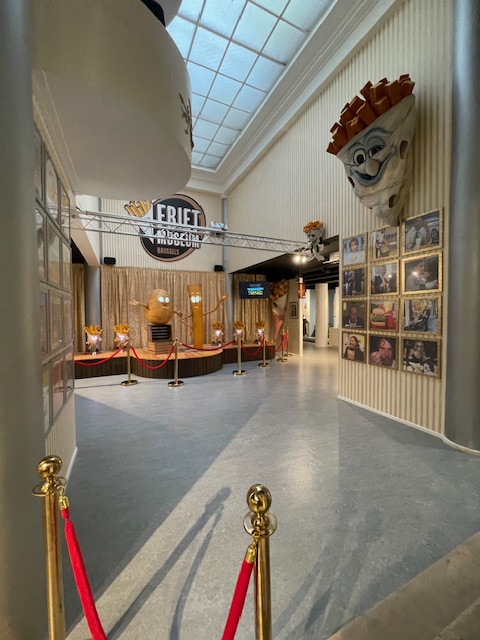
While the concept was born in Bruges, it is in Brussels that it reveals its full potential. A capital renowned for its fries, chocolate, and beer, it offers the perfect setting for a museum dedicated to one of the country’s most iconic culinary symbols. Located on a busy street just a short walk from the Manneken Pis, the Frietmuseum benefits from a constant flow of visitors eager to discover Belgium in a different way. It is within this experiential approach that the museum has developed a discovery path.
An interactive three-part journey
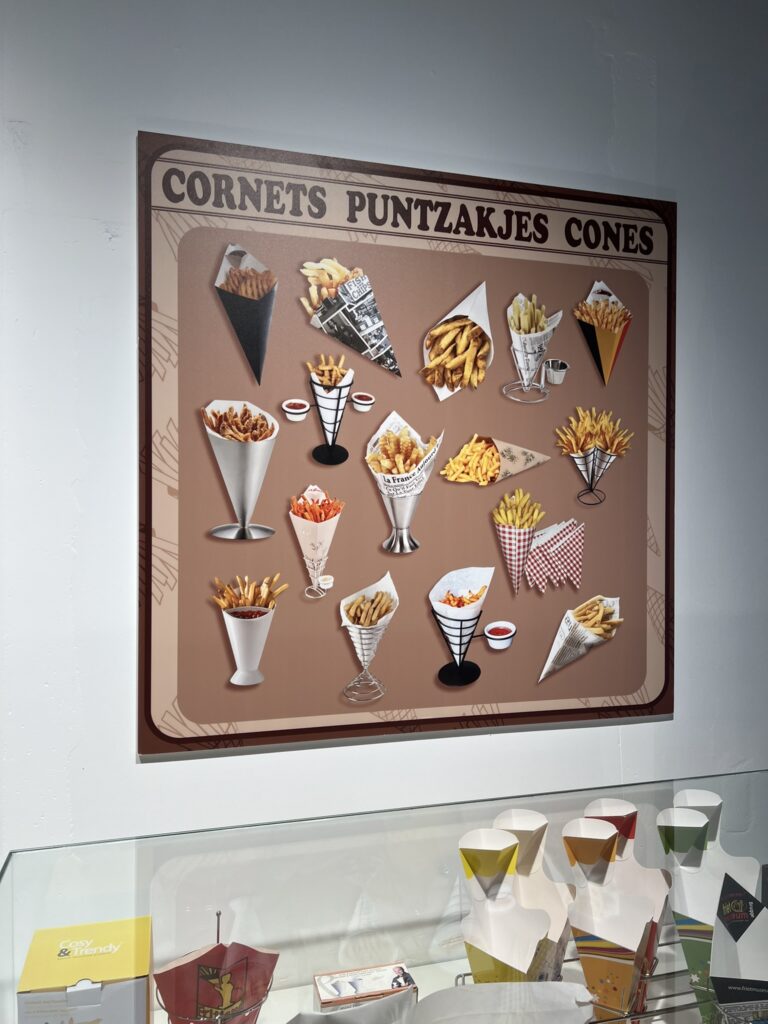
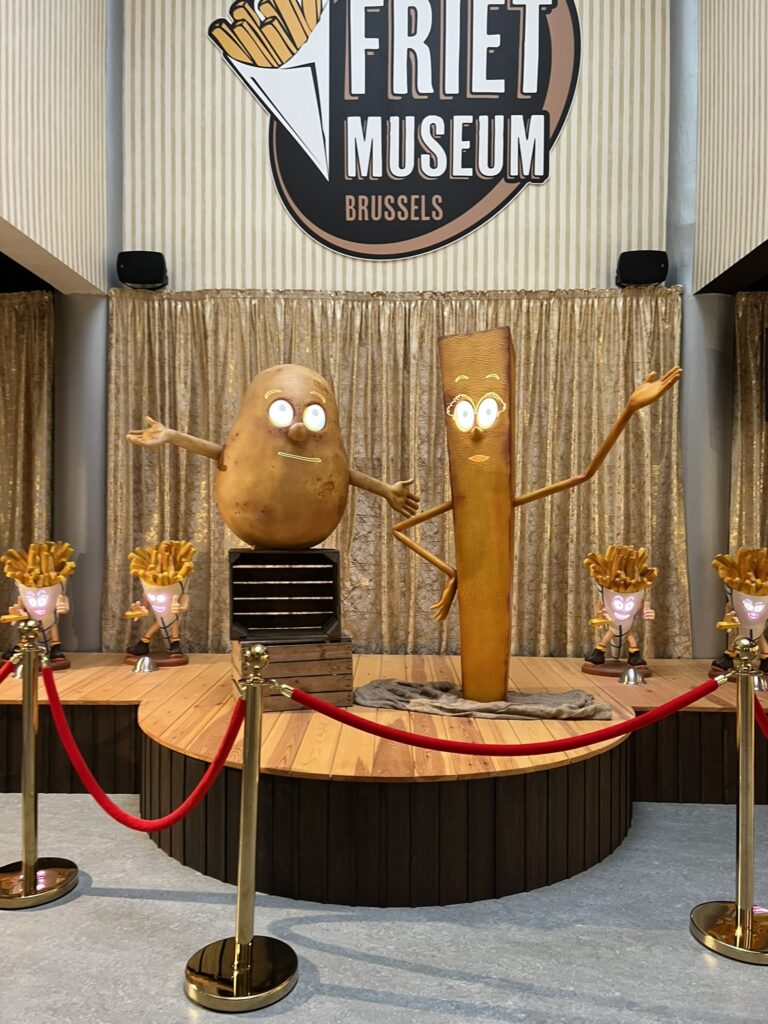
The museum is structured around a three-part experience: an immersive section that plunges visitors into a sensory world, an interactive section where people play, listen, and take photos, and a section dedicated to the collection because “a museum without a collection is not truly a museum.”
This complementarity creates a lively and accessible immersive experience for all. Visitors discover the origin of the potato, listen to audio guides, read, hunt the Colorado potato beetle, and climb onto a tractor. They leave having had a great time, with a better understanding of the subject and a renewed perspective on fries.
Among the highlights of the visit, the final demonstration plays an important role. Beyond a simple tasting, it is a moment where the secrets of Belgian fries are revealed and true expertise is shared. Visitors learn the importance of the potato variety, the ideal thickness, and the key steps of double frying. Not to mention the sauce, carefully selected by the visitor.
The Frietmuseum attracts a wide and international audience: families, groups, and visitors from all over the world. This diversity reinforces the importance of a journey that is accessible, fun, and cultural at the same time, capable of appealing to all generations.
Fries experience 2.0
Beyond the experience offered to visitors, the Frietmuseum is also part of a more sustainable approach.
The Frietmuseum collaborates with committed sustainable partners. The fries arrive pre-cut, promoting optimal waste recycling. Used oils are collected and recycled. The aim is now to integrate this aspect into the museum journey to show that the story of fries does not end once they are eaten.
In the same spirit, the museum plans to develop participatory workshops. Visitors could learn to prepare their own fries and sauces before tasting their creations. A way to further enrich the experience and strengthen the participatory aspect of the journey.
The strength of the collective: joining the Hospitality Cluster
This desire for evolution is also reflected in the collaborations developed by the museum.
Joining the Hospitality Cluster came naturally, especially since the Choco Story Brussels museum is already part of it. “The more we are from the same field, the stronger we are,” emphasizes Mike Misson. In a constantly evolving sector, sharing expertise is essential. Joining the cluster also means becoming part of a collective dynamic where actors in Brussels tourism share their expertise, challenges, and ambitions. A way to continue developing the museum while contributing to the capital’s hospitality ecosystem.