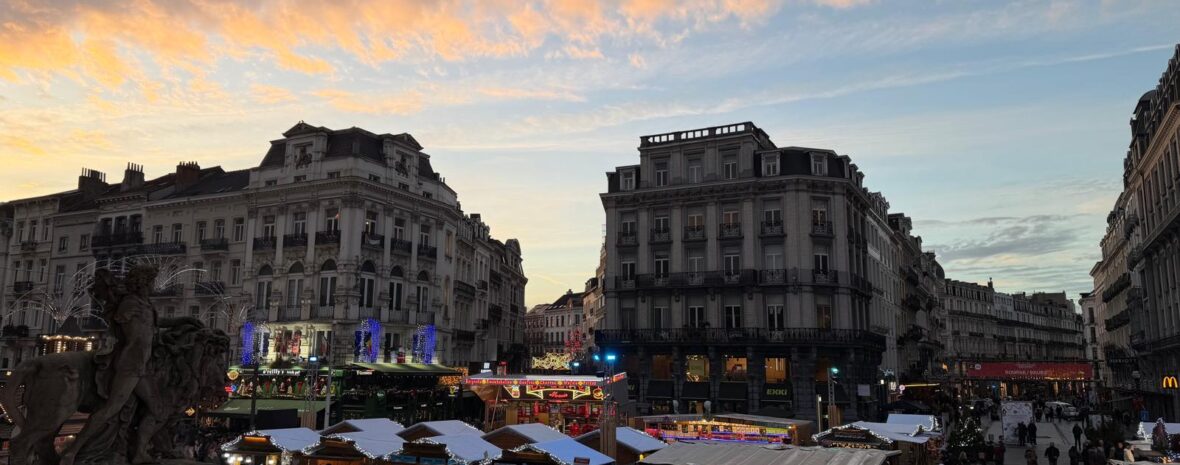
Every winter, Brussels transforms into a bright and lively village thanks to Winter Wonders, one of the most visited Christmas markets in Europe. With more than four million visitors from over twenty countries, each with very different sorting habits, the event is a major tourism driver but also a significant source of waste. In 2025, Brussels Major Events (BME) decided to tackle this challenge head‑on: turning the Christmas market into a full‑scale laboratory to test a complete compostable tableware chain. An ambitious project supported by the European TASTE programme, which encourages initiatives capable of rethinking tourism and food practices through sustainable, digital and resilient innovation.
Reinventing event tableware: an unprecedented technical challenge
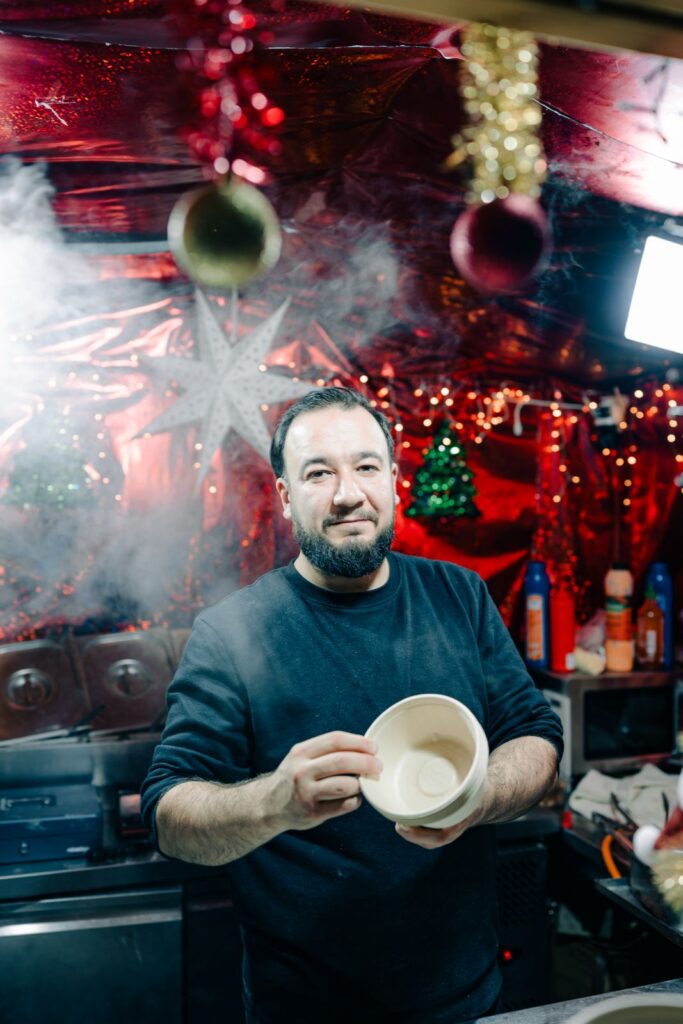
To imagine a more environmentally friendly event, BME began by identifying truly compostable tableware, certified according to European standards, free of problematic additives and compatible with Horeca requirements. After several discussions, an operator finally agreed to test this material in its organic waste stream. This breakthrough made it possible to launch the experiment with the 70 food stands present at the event (restaurants, food trucks, fairground vendors), each with its own constraints, formats and specialties. Adapting a single type of tableware to such diversity represented a real logistical challenge, but also an essential step in assessing the feasibility of the system.
Raising awareness among an international audience: the other major challenge
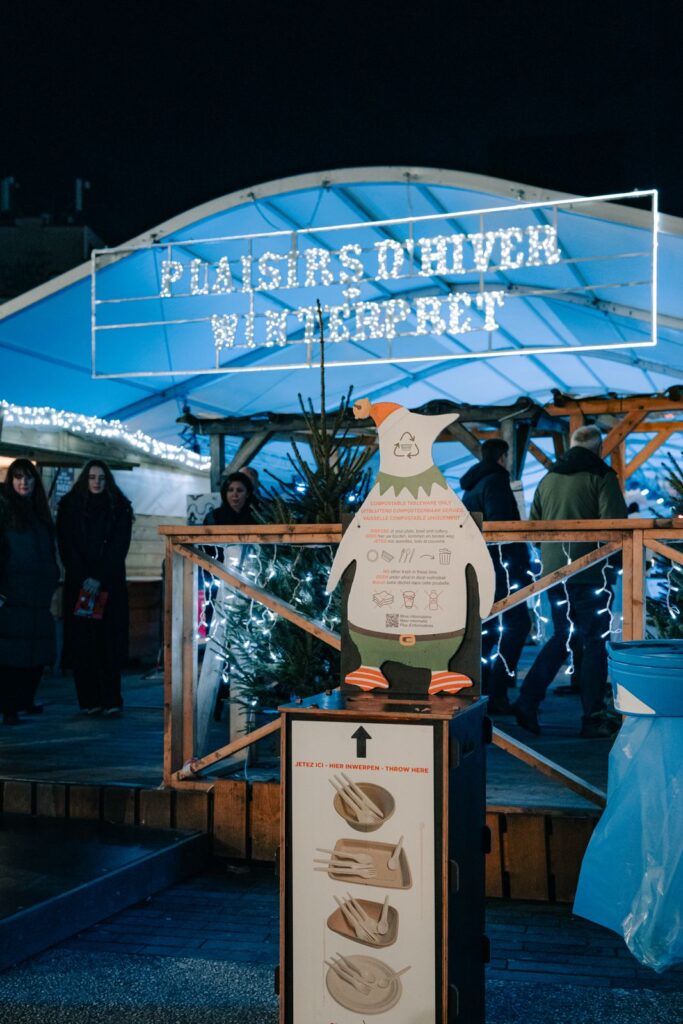
Setting up a technical chain is not enough: visitors must also sort correctly. And there are many of them. BME therefore designed multilingual, visible and intuitive communication. Teams observed behaviours, adjusted messages, modified materials and repositioned information points throughout the event. The goal was simple: enabling everyone to immediately understand where to dispose of their tableware. Because without proper sorting from the start, no compostable chain can truly function.
An innovation linking tourism, food and waste management
This project goes far beyond tableware. It concerns the entire chain of food waste management: the choice of materials, sorting by visitors, checks carried out by partner Bib’z, then collection and treatment by Bruxelles-Propreté. By rethinking each step, BME is exploring a new way of organising major events, where the tourist experience and sustainability progress together.
A model designed to inspire major European events
The experiment carried out at Winter Wonders does not end with this edition: the system will be continued in 2026, and potentially in 2027, to pursue large‑scale testing. This continuity makes it possible to refine an approach that aims above all to demonstrate that a sustainable chain can work within major events. As the 2028 European directives approach, new avenues will be explored to maintain this role of full‑scale laboratory capable of testing innovative and replicable solutions. In parallel, the system will be applied to certain events when conditions allow (size, duration, layout, presence of vendors), gradually strengthening expertise that goes beyond the Brussels context. By transforming Winter Wonders into a platform for continuous innovation, Brussels confirms its ambition: paving the way for a new generation of more responsible, more coherent tourist events capable of inspiring other major European cities.
 TASTE Project
Learn more about TASTE
TASTE LinkedIn
Brussels Major Events
Les Bib’z
TASTE Project
Learn more about TASTE
TASTE LinkedIn
Brussels Major Events
Les Bib’z